
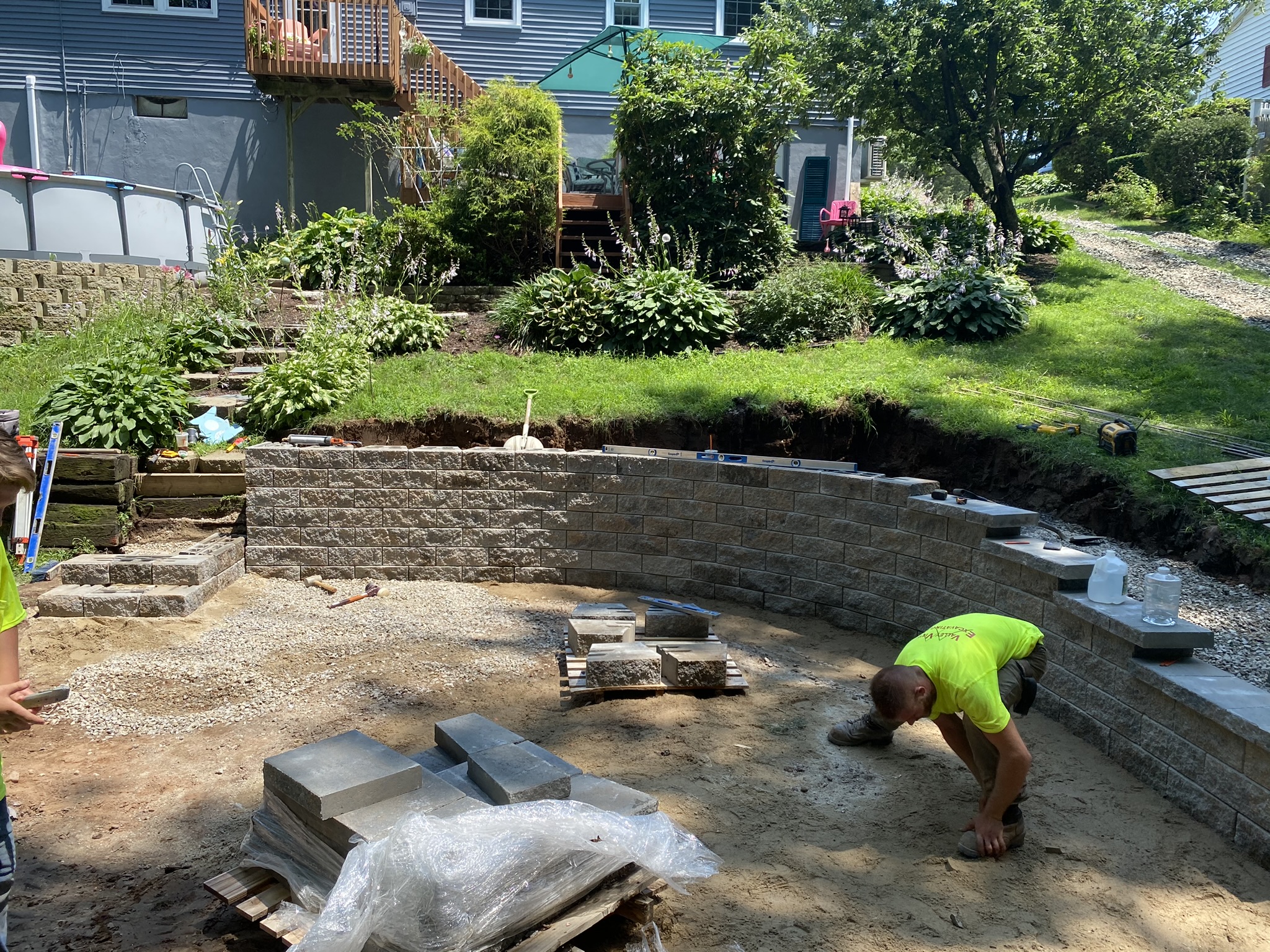
A retaining wall is more than just a decorative feature in your landscape; it is a critical piece of engineering designed to hold back thousands of pounds of soil and manage water runoff. In Hartford County, where our hilly terrain and “freeze-thaw” cycles put constant pressure on outdoor structures, even the sturdiest walls can begin to show their age.
At Valley View Excavating, we have spent over 15 years diagnosing and repairing structural issues. Identifying the early warning signs of failure can save you thousands in property damage. Here is how to tell if your retaining wall is in trouble and the steps required to fix it for good.
1. Spotting the Warning Signs of Failure
You don’t need to be an engineer to see the red flags. Walk your property and look for these three common indicators:
- Leaning or “Bowing”: If the wall is tilting forward or looks like it has a “belly,” the pressure behind it (hydrostatic pressure) has exceeded the wall’s strength.
- Separating Joints: For block or stone walls, look for gaps opening up between the units. This often suggests that the foundation is settling unevenly.
- Cracking or Crumbling: While small hairline cracks in concrete might be aesthetic, large horizontal cracks usually indicate significant structural stress.
2. The Root Cause: Poor Drainage
The #1 enemy of a retaining wall isn’t the weight of the dirt—it’s the weight of the water trapped in that dirt. Without proper drainage and water management, wet soil expands and pushes against the structure with immense force.
- The Fix: During a professional repair, we often install or clear “weep holes” and French drains behind the wall to ensure water has a clear path of escape, relieving that pressure.
3. Foundation and Soil Issues
In towns like Plainville and Bristol, the soil composition can vary wildly. If a wall was built on “soft” soil without a proper sub-base, it will eventually sink or shift.
- The Fix: True structural repair requires professional excavation. We dig out the area behind the wall, remove the failing soil, and replace it with a compacted gravel base and proper backfill to ensure the new structure has a rock-solid foundation.
4. Addressing “Ledge” and Grading Challenges
Sometimes, a wall fails because it wasn’t designed for the specific slope of your yard. Connecticut is famous for hidden ledge and rocky soil that can interfere with traditional wall footings.
- The Fix: As an owner-operator excavation specialist, I personally assess the “underground” factors of your property. We can re-grade the slope to reduce the load on the wall or use heavy machinery to properly anchor the structure into the existing landscape.
5. When to Repair vs. Replace
If the failure is caught early, we can often reinforce the existing structure or fix the drainage. However, if the wall has shifted more than a few inches, a full replacement is usually the safest and most cost-effective long-term solution.
Protect Your Property with Expert Excavation
A failing retaining wall isn’t just an eyesore; it’s a safety hazard that can threaten your home’s foundation or your neighbor’s property. By hiring an expert who understands the technical side of soil pressure and site prep, you ensure your next wall is built to last a lifetime.
Is your wall leaning? Don’t wait for it to collapse. Contact Valley View Excavating today at (860) 559-4977 for a structural evaluation and a free estimate on your retaining wall or drainage project.