
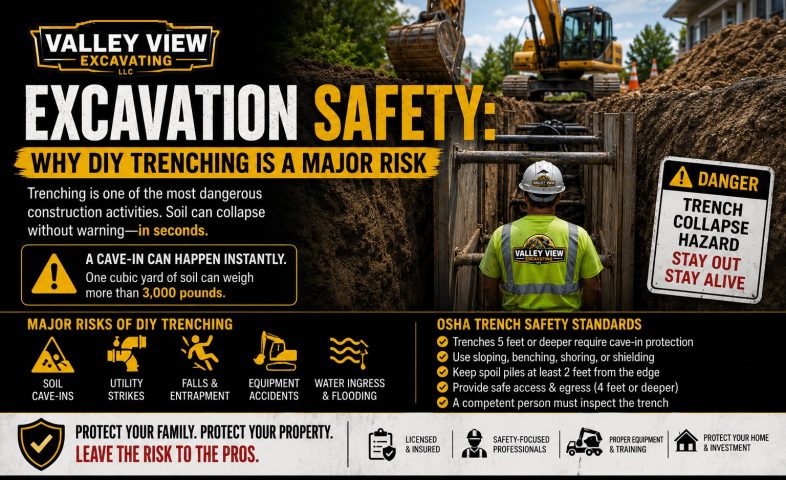
Renting a mini excavator can seem like a practical way to save money on a drainage, sewer, water line, or site preparation project. The equipment may look manageable, the trench may look simple, and the project may seem like a weekend job. The problem is that trenching is not just digging. It is one of the most hazardous forms of excavation.
At Valley View Excavating, we take trench work seriously because soil can shift without warning. A trench that looks stable from above can collapse in seconds. For homeowners in Plainville, Bristol, Southington, New Britain, Farmington, Berlin, and surrounding Connecticut towns, proper trench excavation safety protects people, property, utilities, and long-term project success.
OSHA identifies cave-ins as the greatest risk in trenching and excavation work, and OSHA’s trench safety guidance focuses on sloping, benching, shoring, or shielding trenches to prevent collapse.
Why DIY Trenching Is So Dangerous
A trench is not just a hole in the ground. It is a temporary structure made from soil, moisture, pressure, and gravity. Once soil is removed, the ground around the trench loses support. That can create a dangerous situation even when the trench does not look deep.
Many homeowners underestimate trench risk because the work starts above ground. The danger becomes real once someone steps into the trench to set pipe, repair a sewer line, connect drainage, check grade, or adjust fittings.
The risks include:
- Soil cave-ins
- Underground utility strikes
- Falls into open trenches
- Equipment rollovers
- Struck-by injuries from buckets, loads, or machinery
- Water entering the trench
- Unsafe access and exit
- Damage to foundations, sidewalks, driveways, and landscaping
- Potential liability if someone is injured on the property
OSHA states that trenches 5 feet deep or greater generally require cave-in protection unless the excavation is made entirely in stable rock, and safe access or egress is required in trenches 4 feet deep or more.
The Physics of Soil Collapse
Soil is heavy, unstable, and affected by conditions that are not always visible from the surface. Moisture, vibration, previous digging, frost, nearby structures, and buried utilities can all change how a trench behaves.
A cave-in can happen when the trench wall can no longer resist pressure from surrounding soil. Once a section breaks loose, the collapse can be fast and extremely forceful. NIOSH notes that one square yard of dirt can weigh more than 3,000 pounds, which is enough to crush or suffocate workers.
Several conditions increase trench collapse risk:
- Wet or saturated soil
- Loose fill or previously disturbed ground
- Clay that cracks during dry weather
- Sandy or gravelly soil that shifts easily
- Heavy equipment operating near the edge
- Spoils piled too close to the trench
- Nearby driveways, roads, sidewalks, or foundations
- Vibration from traffic or machinery
- Water entering the excavation
- Freeze-thaw cycles common in Connecticut
This is why trench excavation safety requires more than caution. It requires planning, soil evaluation, proper equipment, utility coordination, and trained decision-making.
Why OSHA Trench Safety Standards Matter
OSHA trench safety standards exist because excavation hazards are predictable and preventable when the right systems are used. The goal is to stop cave-ins before anyone enters the trench.
OSHA highlights three main ways to protect trenches:
- Slope or bench the trench walls
- Shore the trench walls with supports
- Shield workers with a trench box
OSHA also emphasizes keeping materials away from trench edges, checking for standing water or atmospheric hazards, providing safe access and exit, and never entering a trench unless it has been inspected by a competent person.
A “competent person” under OSHA is someone capable of identifying existing and predictable hazards and authorized to take prompt corrective measures. Trenching work often requires that level of training because the hazards are technical and can change during the job.
Why Renting an Excavator Does Not Make the Job Safe
Searches for excavator rental cost are common because homeowners want to compare the price of a machine rental against the cost of hiring a professional. The rental price, however, is only one piece of the real cost.
A trenching project may also require:
- Utility markouts
- Permits
- Proper trench width and depth planning
- Soil evaluation
- Spoil pile management
- Safe access and exit
- Shoring, shielding, or sloping
- Pipe bedding materials
- Drainage stone
- Compaction equipment
- Backfill planning
- Erosion control
- Site restoration
- Insurance protection
- Knowledge of local code and inspection requirements
A rental machine can dig a hole, but it does not provide trench protection, experience, or liability coverage. The safest choice is often hiring an excavation contractor before the project starts, especially for sewer lines, drainage systems, water lines, foundation work, septic work, or utility trenches.
Utility Strikes Are Another Major Risk
Before excavation begins, buried utilities must be located. In Connecticut, anyone using power-operated excavation equipment must contact Call Before You Dig at least two full days before excavation, excluding Saturdays, Sundays, and holidays, and no more than 30 days before the work.
This matters because underground utilities can include:
- Natural gas lines
- Electric lines
- Water lines
- Sewer lines
- Storm drains
- Communications cables
- Irrigation lines
- Private underground utilities
A utility strike can cause injury, service outages, property damage, repair costs, and project delays. Connecticut’s Call Before You Dig program exists to help prevent damage to water, natural gas, sewer, telecommunications, and other buried infrastructure.
Professional excavation contractors know how to coordinate markouts, read utility markings, dig with caution around marked areas, and adjust the excavation plan when site conditions change.
Common Home Projects That Can Become Dangerous Trenches
Many excavation projects begin as routine property improvements. The risk increases once the trench becomes deep, narrow, unstable, close to a structure, or connected to buried utilities.
High-risk trenching projects include:
- Sewer line replacement
- Sewer line repair
- Water line repair
- Storm drain installation
- French drain installation
- Yard drainage trenching
- Foundation drainage
- Basement waterproofing excavation
- Septic line installation
- Utility conduit trenching
- Retaining wall footing excavation
- Driveway drainage work
Valley View Excavating provides professional sewer excavation services across Connecticut, including installation, repair, maintenance, and replacement, with site assessments and safety-focused planning.
The Hidden Liability of DIY Trenching
A do-it-yourself trenching project can create more than physical danger. It can create legal, financial, and insurance concerns.
If someone is hurt in or around an open trench, the property owner may face serious consequences. If a utility is damaged, the repair cost may not be the only issue. If the work affects a neighbor’s property, sidewalk, driveway, drainage pattern, or foundation, the project can become expensive quickly.
A licensed and insured excavation contractor helps reduce risk because the work is handled by trained professionals using proper planning, equipment, and safety procedures. This article is for general education only and should not be treated as legal advice, but the practical takeaway is clear: trenching is not a casual homeowner task.
Why Professional Excavation Planning Matters
Safe excavation starts before the machine arrives. A professional contractor looks at the full jobsite, not just the area being dug.
A safer excavation plan may include:
- Reviewing the project scope
- Coordinating utility markouts
- Checking access for equipment
- Evaluating soil and drainage conditions
- Identifying nearby structures
- Planning spoil pile placement
- Choosing the right machine
- Planning trench depth and width
- Managing water in or near the trench
- Protecting lawns, driveways, and hardscapes
- Backfilling and compacting properly
- Restoring the work area after the job
Excavation Safety for Yard Drainage Projects
Yard drainage projects are a common reason homeowners consider renting equipment. Standing water, soggy lawns, basement leaks, and pooling near foundations can make trenching feel urgent.
The problem is that drainage trenches still require safe excavation practices. A French drain, channel drain, foundation drain, or downspout drainage system must be planned around slope, soil, depth, utilities, and discharge location.
Valley View Excavating specializes in Connecticut yard drainage solutions and installs systems designed to move water away from problem areas around the home.
Excavation Safety for Sewer Line Work
Sewer line excavation is especially risky because it often requires deeper digging, precise pipe slope, utility awareness, and careful restoration. Many sewer lines run several feet below grade, which can bring trench protection requirements into the project.
A sewer trench may also involve:
- Older clay or cast iron pipe
- Tree root intrusion
- Collapsed pipe sections
- Wet soil
- Tight access near the home
- Municipal connection points
- Driveways, walkways, or patios above the line
- Permits and inspections
Valley View Excavating handles sewer line excavation across Connecticut and uses site assessments, locating technology, and professional excavation methods to complete repairs and replacements safely and efficiently.
When to Call an Excavation Contractor
A homeowner should contact a professional before digging when the project involves:
- A trench deeper than a simple planting bed
- Any utility line
- Sewer, water, or drainage pipe
- Work near a foundation
- Work near a driveway or walkway
- Wet or unstable soil
- A slope or retaining wall
- A septic system
- Large equipment
- Required permits or inspections
- Any situation where someone may need to enter the trench
If the project needs more than a shovel and shallow hand digging, professional review is the safer path.
Why Hiring an Excavation Contractor Saves More Than Time
Hiring a professional does more than remove the physical labor. It helps protect the entire project from avoidable problems.
A qualified excavation contractor brings:
- Equipment experience
- Safer trenching practices
- Utility coordination
- Proper grading knowledge
- Soil and drainage awareness
- Familiarity with local conditions
- Insurance protection
- Efficient completion
- Cleaner backfill and restoration
- Better long-term results
A rental machine may seem cheaper at first, but the real value comes from avoiding injury, utility damage, failed drainage, poor backfill, property damage, and unfinished work.
Local Trenching and Excavation Help in Connecticut
At Valley View Excavating, we help homeowners and property owners across Central Connecticut with safe, professional excavation. Our team handles projects ranging from sewer line excavation and yard drainage to septic work, water line service, site preparation, demolition, and more.
We serve Plainville, Bristol, Southington, New Britain, Farmington, Berlin, Newington, and surrounding Connecticut towns.
If a project requires trenching, do not start with an excavator rental. Start with a safe plan.
Request a quote or learn more about our excavation services.
FAQs About Trench Excavation Safety
Why is trench excavation safety important?
Trench excavation safety is important because soil can collapse suddenly and without warning. A cave-in can crush, trap, or suffocate a person inside the trench. Proper sloping, shoring, shielding, inspections, and safe access help reduce the risk.
Is DIY trenching safe for homeowners?
Do-it-yourself trenching can be dangerous, especially when the trench is deep, narrow, wet, near utilities, or close to a foundation. For sewer lines, drainage systems, water lines, septic work, or utility trenches, hiring an excavation contractor is the safer choice.
How deep can a trench be before protection is needed?
OSHA generally requires protective systems for trenches 5 feet deep or greater unless the excavation is made entirely in stable rock. A competent person may also determine that protection is needed at shallower depths depending on soil and site conditions.
Does calling 811 make trenching safe?
Calling 811 helps locate buried utilities, but it does not make the trench itself safe. Trench safety also requires soil evaluation, proper equipment, safe access, spoil pile control, water management, and protective systems when needed.
Why should homeowners compare more than excavator rental cost?
Excavator rental cost does not include safety planning, utility coordination, shoring or shielding, trench access, insurance, experience, backfill, compaction, permits, or repairs if something goes wrong. The lowest rental price can become expensive if the project creates damage or injury.
What projects require hiring an excavation contractor?
Projects involving sewer lines, water lines, drainage systems, septic systems, foundation excavation, deep trenches, utility work, or heavy equipment should be handled by an experienced excavation contractor.
Does Valley View Excavating provide trenching and excavation services?
Yes. Valley View Excavating provides excavation, sewer excavation, yard drainage, septic, water line, demolition, site work, and related services for homeowners and property owners in Plainville and surrounding Connecticut towns.