
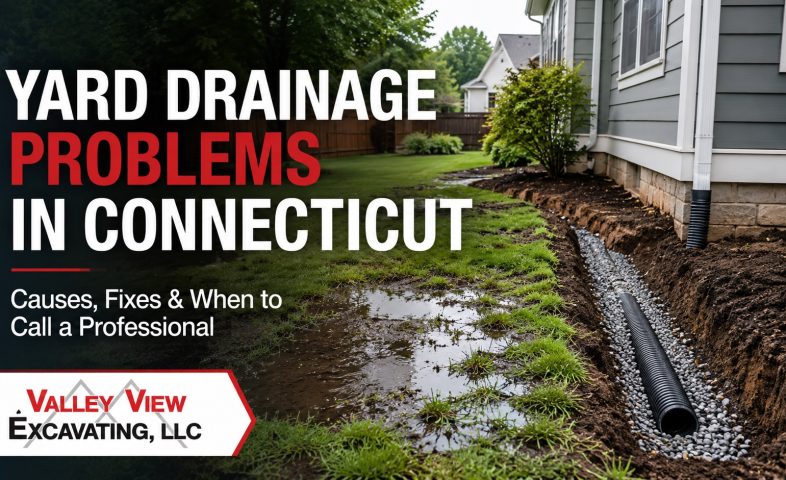
A soggy yard can turn a beautiful property into a daily frustration. Standing water, basement leaks, muddy lawn areas, washed-out soil, and foundation moisture are more than simple inconveniences. These problems can affect curb appeal, property value, lawn health, and the long-term stability of a home.
At Valley View Excavating, we help Connecticut homeowners solve yard drainage problems with practical excavation, grading, trenching, and stormwater management solutions. From Bristol and Plainville to Southington, New Britain, Farmington, and nearby Central Connecticut communities, our goal is to move water safely away from the home before it causes expensive damage.
Why Yard Drainage Matters for Connecticut Properties
Connecticut weather can be tough on residential properties. Heavy spring rain, summer storms, clay-heavy soil, freeze-thaw cycles, and snowmelt can all expose drainage weaknesses around a yard or foundation.
Poor drainage can lead to:
- Foundation cracks and basement water problems
- Standing water that damages grass and landscaping
- Soil erosion around slopes, patios, and walkways
- Mold, mildew, and musty basement odors
- Mosquito problems caused by stagnant water
- Soft, muddy areas that make the yard hard to use
- Reduced curb appeal and property value
Drainage problems rarely fix themselves. A small puddle near the foundation can become a basement leak. A muddy low spot can spread into lawn failure. A washed-out slope can weaken hardscapes or retaining walls. That is why early drainage correction is one of the smartest ways to protect a Connecticut home.
Common Yard Drainage Problems and How We Fix Them
1. Standing Water in the Yard
Standing water is one of the clearest signs that a yard is not draining properly. After rain, puddles may sit for hours or days in the same areas, leaving the lawn soggy, muddy, and difficult to maintain.
Common causes include:
- Poor grading
- Low spots in the yard
- Compacted soil
- Clay-heavy soil
- Limited natural slope
- Runoff from nearby properties
Best solutions:
In many cases, the solution begins with proper excavation and grading. We reshape the land so water can move away from low areas and drain naturally. For deeper drainage problems, we may recommend a French drain, dry well, or underground drainage system that captures water and redirects it to a safer discharge area.
2. Water Pooling Near the Foundation
Water collecting near the foundation is a warning sign that should not be ignored. When soil stays saturated around the base of a home, moisture can enter cracks, increase hydrostatic pressure, and contribute to basement leaks.
Common causes include:
- Downspouts discharging too close to the home
- Negative grading toward the foundation
- Clogged or missing perimeter drains
- Poor soil drainage around the house
- Settled backfill near foundation walls
Best solutions:
We often start by checking the gutters and downspouts. If roof water is being released too close to the home, underground downspout drains can move that water farther away. When the yard slopes toward the house, regrading may be needed to create positive drainage.
For more serious foundation water issues, homeowners may need basement waterproofing and footing drain solutions to reduce moisture pressure and protect the foundation.
3. Soggy Lawn That Never Dries Out
A lawn that feels soft or spongy even days after rain may have a subsurface drainage problem. This is common in areas with compacted soil, poor absorption, or hidden low spots beneath the surface.
Common causes include:
- High water table
- Poor soil absorption
- Clay soil layers
- Over-irrigation
- Broken sprinkler lines
- Lack of underground drainage
Best solutions:
We evaluate the slope, soil conditions, and water movement across the property. If the problem is surface-level, grading may help. If water is trapped below the lawn, we may install a subsurface drainage system that collects water and moves it to a dry well, storm drain, or safe outlet.
4. Basement Leaks and Flooding
Basement water is one of the most serious signs of poor drainage. Water entering a basement can damage flooring, drywall, stored belongings, mechanical systems, and indoor air quality.
Common causes include:
- Foundation cracks
- Hydrostatic pressure
- Poor exterior drainage
- Failed footing drains
- Missing or undersized sump pump
- Water pooling near the foundation
Best solutions:
The right repair depends on where the water is entering. If cracks are visible, foundation crack repair may be needed. If exterior water pressure is the issue, drainage correction outside the home is often the stronger long-term solution.
Exterior drainage systems, footing drains, sump pump upgrades, and waterproofing membranes can all help keep water out of the basement. Valley View Excavating focuses on solving the outside water problem first, so the basement stays dry from the source.
5. Soil Erosion and Washout
Fast-moving water can pull soil, mulch, seed, and gravel out of place. Erosion is especially common on sloped yards, driveways, patios, and properties with unmanaged runoff.
Common causes include:
- Steep slopes
- Downspout overflow
- Poor stormwater flow
- Bare soil with little vegetation
- Hardscapes pushing water into one area
- No erosion control system
Best solutions:
We slow down and redirect water using catch basins, channel drains, swales, stone-lined drainage paths, and erosion control grading. On steeper properties, retaining walls with proper drainage can help stabilize soil and protect the landscape.
6. Runoff From Neighboring Properties
Sometimes water problems come from outside the property line. If a home sits lower than nearby lots, runoff from surrounding properties can flow into the yard during storms or snowmelt.
Common causes include:
- Higher neighboring lots
- Improper hardscape placement
- Fence lines trapping runoff
- Poor subdivision grading
- No interceptor drainage
Best solutions:
Interceptor drains, swales, berms, and underground piping can help redirect incoming water before it reaches the home. The goal is to control runoff without pushing the problem onto another property. A properly planned drainage system protects the yard, foundation, and surrounding landscape.
7. Downspouts Draining in the Wrong Location
A gutter system may be working correctly, but the downspouts can still create drainage problems if they release water too close to the foundation or into a low yard area.
Common causes include:
- Short downspout extensions
- Disconnected downspouts
- No underground piping
- Poor discharge location
- Low spots near the outlet
Best solutions:
Underground downspout drains are one of the most effective ways to prevent foundation moisture. These systems carry roof water away from the home and release it through pop-up emitters, dry wells, or a larger drainage system.
For properties with heavier runoff, storm drain repair and drainage improvements may also be needed.
How Valley View Excavating Solves Yard Drainage Problems
Every yard is different, so every drainage plan should be built around the actual property conditions. A one-size-fits-all fix may move water temporarily, but it often fails during heavy rain or winter thaw.
1. Site Evaluation
We inspect the yard, foundation area, slopes, low spots, existing drains, downspouts, and soil conditions. We also look at where the water starts, where it collects, and where it should be safely discharged.
2. Custom Drainage Plan
After reviewing the site, we recommend a drainage solution based on the root cause. This may include grading, trenching, French drains, dry wells, underground downspout drains, catch basins, footing drains, or erosion control work.
3. Professional Installation
Valley View Excavating has the equipment needed to dig, trench, grade, pipe, backfill, and restore the work area properly. Our team installs durable drainage systems designed for Connecticut soil, storms, and freeze-thaw conditions.
4. Long-Term Protection
A good drainage system should do more than dry out one puddle. It should protect the home, yard, foundation, and landscape for years. Our approach focuses on long-term water control, not temporary surface fixes.
When to Call a Yard Drainage Contractor
Some minor drainage concerns can be handled with simple downspout extensions or small landscape adjustments. However, professional help is recommended when water problems keep coming back.
Call Valley View Excavating if:
- Water enters the basement after rain
- The lawn stays soggy for days
- Puddles keep forming in the same spots
- Soil is washing away from slopes or hardscapes
- Water is pooling near the foundation
- DIY drainage fixes have not worked
- A musty odor or mold appears indoors
- Foundation cracks are getting worse
Drainage work is not only about moving water. It is about protecting the entire property from avoidable damage.
Take the First Step Toward a Dry, Healthy Yard
Yard drainage problems can get worse with every storm. What starts as a soggy lawn can turn into soil erosion, foundation moisture, or basement water damage. The sooner the issue is corrected, the easier it is to protect the property.
At Valley View Excavating, we help homeowners take control of water problems with custom drainage plans, proper excavation, and dependable installation. Whether the property needs grading, downspout drainage, a French drain, stormwater management, or foundation protection, our team is ready to help.
Contact Valley View Excavating today to schedule a site evaluation and get a drainage solution built for your Connecticut property.