
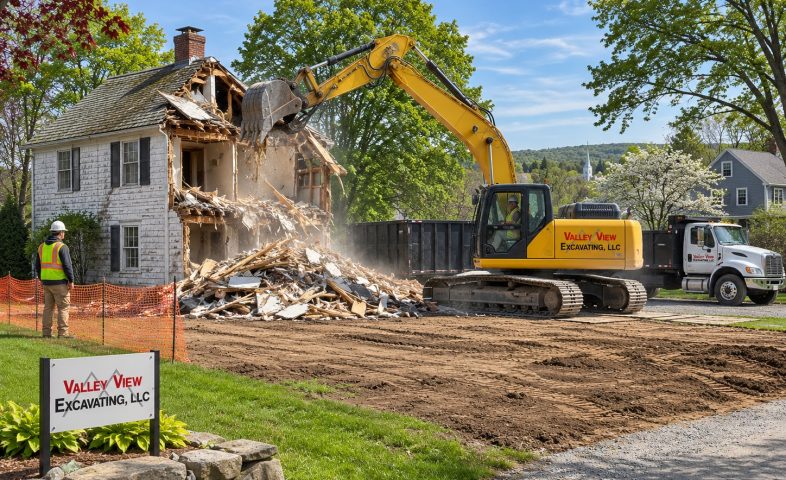
House demolition cost in Connecticut depends on the home’s size, construction materials, foundation, debris disposal, and site accessibility. National 2026 estimates range from approximately $4 to $17 per square foot, while published estimates for full-home demolition in Southern Connecticut commonly fall between $15,000 and $40,000 or more, particularly when foundation removal is included. Additional expenses may include permits, utility disconnections, asbestos removal, excavation, and final grading. A professional site assessment provides the most accurate project estimate.
How Much Does It Cost to Demolish a House in Connecticut?
Demolishing an existing home involves considerably more than knocking down walls and hauling away materials.
At Valley View Excavating, LLC, we help Connecticut property owners prepare residential sites for demolition, excavation, and future construction.
Whether you’re replacing an aging house, clearing an abandoned structure, or preparing land for redevelopment, understanding the full scope helps prevent unexpected expenses.
National demolition estimates provide a starting point, but Connecticut properties can present additional challenges involving buried foundations, narrow access, underground utilities, and environmental requirements.
We recommend obtaining an itemized demolition estimate that includes debris removal, foundation work, and the condition the property must be left in after demolition.
House Demolition Cost Per Square Foot
Demolition contractors commonly use square footage as an initial budgeting reference.
According to 2026 national pricing data, residential demolition typically costs approximately $4 to $17 per square foot.
| House Size | Estimated Demolition Cost |
|---|---|
| 1,000 sq. ft. | $4,000 to $17,000 |
| 1,500 sq. ft. | $6,000 to $25,500 |
| 2,000 sq. ft. | $8,000 to $34,000 |
| 2,500 sq. ft. | $10,000 to $42,500 |
| 3,000 sq. ft. | $12,000 to $51,000 |
These are broad national estimates calculated by square footage, not confirmed Connecticut contractor prices. Foundation removal, hazardous materials, difficult access, and restoration can increase costs.
7 Factors That Affect Residential Demolition Costs
1. House Size and Construction Materials
Larger homes generally require more equipment time, labor, and debris hauling.
Construction materials also affect demolition difficulty.
Wood-framed homes may be easier to dismantle than buildings containing extensive concrete, brick, masonry, or structural steel.
We evaluate construction type and demolition methods before estimating equipment requirements.
2. Foundation and Basement Removal
Removing the house above ground is only part of some demolition projects.
Existing concrete foundations, basement walls, footings, and slabs may also need removal.
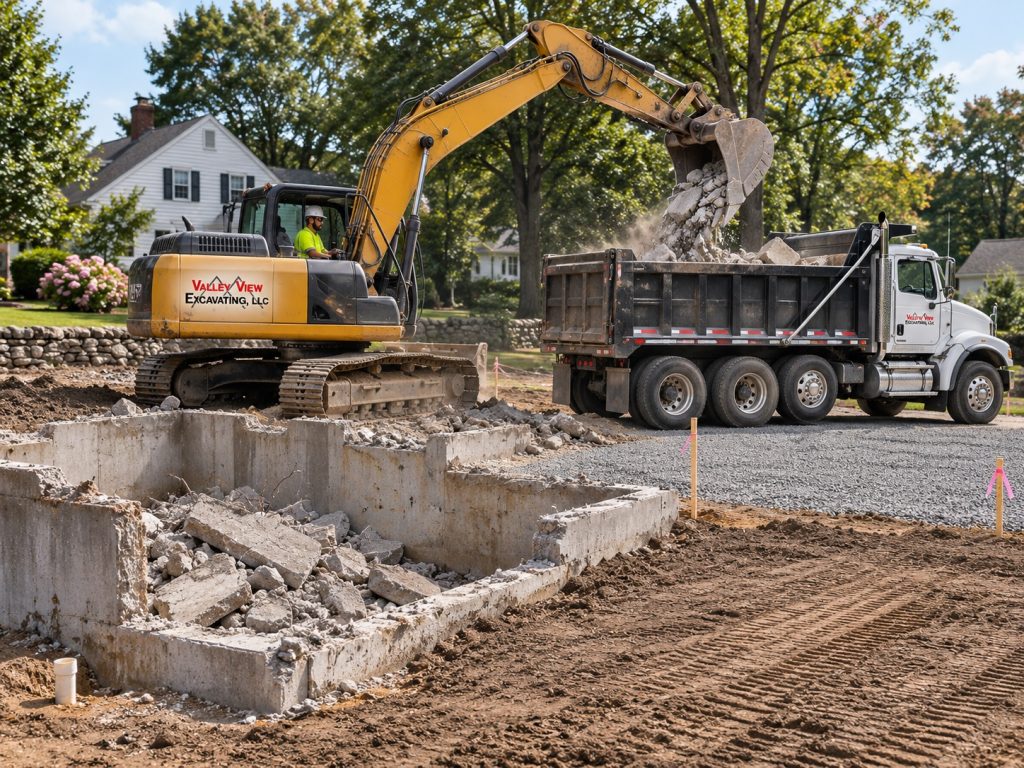
Foundation demolition can involve heavy excavation, concrete breaking, debris hauling, and engineered backfilling.
We recommend defining whether the estimate includes complete foundation removal or only above-ground demolition.
3. Hazardous Materials and Asbestos
Older Connecticut homes may contain asbestos in insulation, flooring, siding, or other building materials.
Lead-based paint and additional hazardous materials can also affect demolition planning.
Connecticut requires applicable asbestos assessment, abatement, and notification procedures before demolition.
We recommend identifying potential hazards before heavy equipment arrives.
Specialized abatement must be handled by appropriately licensed professionals where required.
4. Demolition Permits and Inspections
Residential demolition generally requires approval from the local building department.
Requirements vary by municipality and may involve documentation of utility disconnections, environmental assessments, and demolition plans.
The Connecticut Department of Public Health also requires advance notification for demolition projects covered by its asbestos regulations.
We recommend confirming applicable permits, notifications, and inspection requirements before scheduling equipment.
5. Debris Hauling and Disposal
A complete house teardown produces substantial debris.
Common materials include:
- Wood framing and sheathing
- Roofing shingles
- Drywall and insulation
- Concrete and masonry
- Metal and plumbing materials
- Flooring and interior finishes
Disposal expenses depend on material quantities, weight, recycling opportunities, and facility fees.
We recommend confirming whether debris removal and disposal are included in the contractor’s quoted price.
6. Property Access and Underground Utilities
A property with open equipment access may be less expensive to demolish than a house surrounded by neighboring structures, fences, mature trees, or restricted driveways.
Underground utilities also require careful coordination.
Before demolition, gas, electric, water, sewer, and other relevant services must be safely disconnected or protected.
Limited access and complex utility conditions can increase labor and equipment costs.
7. Site Grading and Preparation
After removing the structure, the remaining land may require additional work.
This can include backfilling excavations, compacting soil, removing buried debris, and establishing appropriate surface grades.
At Valley View Excavating, we offer professional residential demolition services in Connecticut alongside excavation and site preparation.
We recommend clarifying whether the final estimate includes rough grading or complete preparation for new construction.
Complete House Demolition vs. Partial Demolition
Not every residential project requires removing the entire structure.
| Demolition Type | Typical Scope |
|---|---|
| Interior demolition | Removing selected interior finishes and nonstructural components |
| Partial demolition | Removing a specific building section or addition |
| Garage or shed demolition | Removing detached accessory structures |
| Complete house demolition | Removing the entire residential structure |
| Full demolition with site preparation | Removing the structure, foundation, debris, and preparing the site |
Partial demolition may reduce the amount of material removed, but structural complexity can increase the cost per square foot.
How to Save Money on House Demolition
We recommend several ways to control expenses without compromising safety.
- Get an itemized estimate. Confirm which services are included.
- Identify hazardous materials early. Avoid unexpected project delays.
- Coordinate utility disconnections. Complete required preparations before demolition.
- Combine related excavation work. Coordinating demolition and site preparation may reduce repeated equipment mobilization.
- Clarify the final site condition. Determine whether backfilling, compaction, and grading are included.
For additional preparation guidance, read our related article, Demolition Safety: How to Properly Clear a Lot for New Construction in CT.
Frequently Asked Questions
How much does it cost to tear down a 2,000-square-foot house?
National estimates range from approximately $8,000 to $34,000. Connecticut pricing depends on the foundation, materials, disposal requirements, and site access.
Does house demolition include foundation removal?
Not always. The contract should clearly state whether foundations, footings, slabs, and basement walls are included.
Do you need a permit to demolish a house in Connecticut?
Yes, residential building demolition generally requires a local demolition permit, along with applicable environmental notifications and utility coordination.
How long does residential demolition take?
Physical demolition may take several days, depending on the structure. Permitting, hazardous-material work, utility disconnections, and site preparation can significantly extend the overall project schedule.
Is rebuilding cheaper than renovating?
It depends on the building’s condition and renovation scope. Extensive structural repairs may make rebuilding worth evaluating, but the total cost must include demolition and new construction.
Get a Residential Demolition Estimate From Valley View Excavating, LLC
Understanding house demolition cost helps Connecticut property owners plan a project without overlooking important excavation and site preparation expenses.
At Valley View Excavating, LLC, we provide residential demolition, excavation, debris removal, and site preparation services throughout Plainville and surrounding Connecticut communities.
Since 2007, we’ve helped homeowners and property owners prepare their sites for construction and property improvements.
Whether you’re removing an aging house or preparing land for a new building, we’ll evaluate the project requirements and help determine the appropriate demolition approach.