
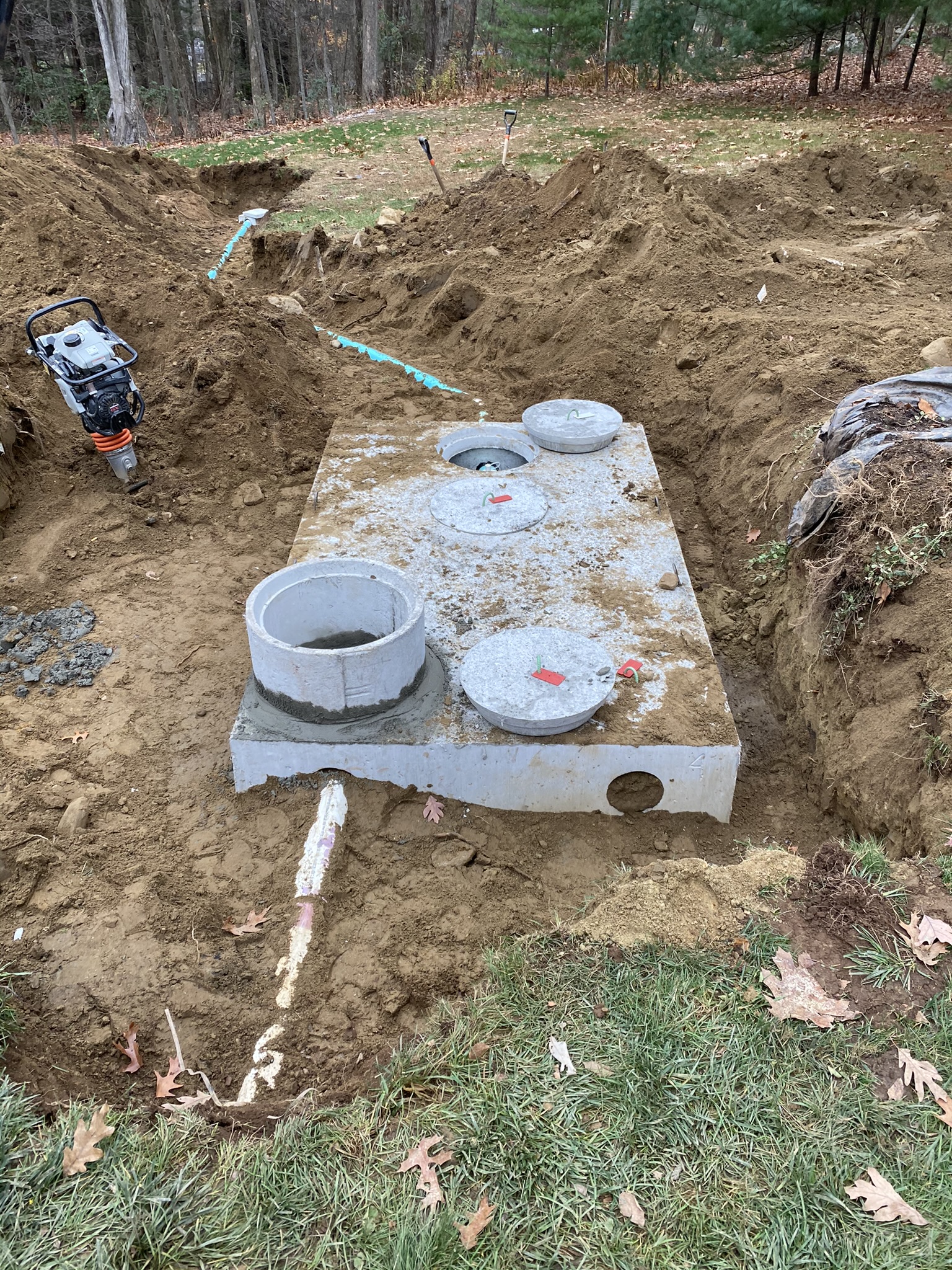
A septic system is one of the most critical—and expensive—components of a property’s infrastructure. Yet, because it is buried underground, it is often “out of sight, out of mind” until a backup occurs. Achieving true septic system longevity isn’t about luck; it is a matter of precise engineering, geological understanding, and meticulous installation.
At Valley View Excavating LLC, we believe that a 30-year septic system starts on day one with the soil. Here is the science behind how we ensure your system stands the test of time.
1. The Perc Test: Why Soil Science Dictates Design
Before a single bucket of dirt is moved, we must understand the “Percolation Rate” of your land. A perc test measures how quickly water dissipates through the soil.
Soil composition in Connecticut varies wildly, from heavy clay to porous sand. If the soil drains too slowly, the system will back up; if it drains too quickly, effluent won’t be properly filtered before reaching the groundwater.
- The Sieve Analysis: We examine the soil horizons to identify the “restrictive layer” (like bedrock or hardpan).
- Load Calculations: The results of the perc test determine the size and type of the leach field required to handle your household’s daily water load.
2. The Physics of Tank Placement and Leveling
The septic tank is the primary treatment zone where solids settle and anaerobic bacteria begin the decomposition process. If a tank is installed on poorly compacted soil, it can shift or tilt over time.
Even a slight tilt can disrupt the “baffle” system inside the tank. Baffles are designed to prevent solids from exiting the tank and entering the leach field. When a tank shifts, solids can bypass the baffles, leading to the #1 cause of premature system failure: a clogged leach field. At Valley View Excavating LLC, we utilize laser-leveling technology and structural backfilling to ensure the tank remains perfectly seated for decades.
3. Leach Field Engineering: The Final Filter
The leach field (or absorption field) is where the real magic happens. This area consists of a series of trenches or chambers that distribute pre-treated effluent into the ground.
- Slope Precision: The pipes leading to the leach field must have a very specific pitch. Too steep, and the water rushes through without being absorbed; too shallow, and it settles in the pipes.
- Aggregates and Geotextiles: We use specific washed stone and breathable geotextile fabrics to protect the soil from “biomat” buildup—a slimy layer of bacteria that can eventually waterproof your leach field and cause failure.
4. Avoiding the “Compaction Trap”
One of the biggest mistakes made during site preparation is driving heavy machinery over the area designated for the leach field. This compacts the soil, destroying its natural ability to absorb water. We carefully flag and protect your “perc-proven” areas from the start of the project to ensure the soil remains porous and functional.
Partner with the Excavation Experts
Installing a septic system is a high-stakes task that requires a deep understanding of Connecticut’s environmental regulations and geological challenges. Whether you are building a new home or replacing a failing system, Valley View Excavating LLC brings the technical precision and heavy equipment necessary to do the job right the first time.
Protect your property’s long-term value. Contact Valley View Excavating LLC today for a consultation on your septic installation or site development project.