
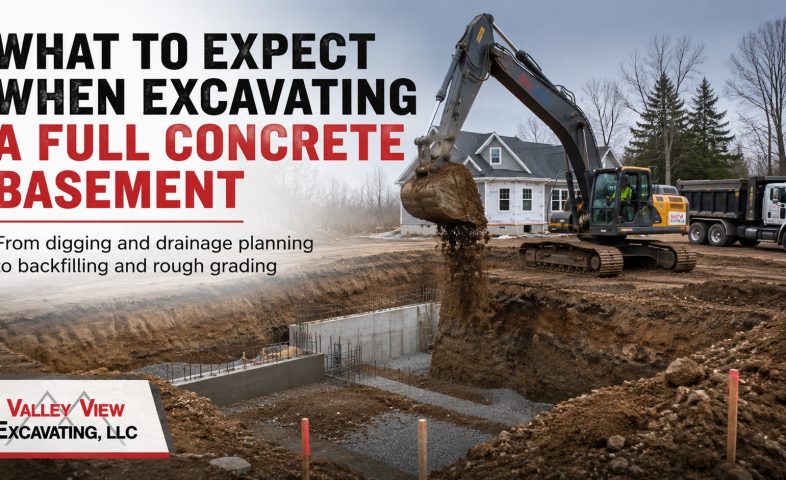
A full concrete basement excavation starts with site clearing, utility marking, access planning, and rough layout. The excavation crew then digs the foundation hole to the required depth, manages soil stockpiles or hauling, prepares the footing area, supports safe access, and coordinates with the concrete contractor. After the walls are poured and cured, backfilling foundation walls and rough grading help prevent settling and move water away from the home.
Why Basement Excavation Sets the Tone for the Whole Build
Most homeowners picture the concrete walls, not the work that happens before the pour. The truth is that the basement excavation controls the first major structural condition of a new home or addition.
At Valley View Excavating, the focus is not just digging a large hole. The goal is to create a stable, accessible, well-drained building area that allows the foundation contractor to work safely and accurately. For homeowners searching for basement excavation contractors in Plainville, Southington, Bristol, Farmington, New Britain, and nearby Connecticut towns, understanding the sequence helps reduce surprises.
Step 1: Site Clearing and Access Planning
Before the excavator starts digging, the site needs to be prepared. This may include tree removal, stump removal, brush clearing, driveway access, erosion controls, and safe equipment staging.
If an older structure, shed, slab, driveway, or debris field is in the way, demolition services may come first. This step matters because poor access can slow the job, increase hauling time, and make excavation less efficient.
A clear site also helps the crew separate usable material from unsuitable fill. Clean structural soil may be stockpiled for later backfill. Wet clay, organic soil, stumps, roots, and debris usually should not be placed against a new foundation.
Step 2: Layout, Utilities, and Dig Depth
Once the site is open, the foundation footprint is laid out based on the plan. Utilities must be marked before digging begins. The crew also reviews depth, wall height, footing elevation, overdig space, drainage needs, and where the excavated material will go.
Digging foundation cost depends on several jobsite conditions:
| Cost Factor | Why It Matters |
|---|---|
| Basement size and depth | Larger and deeper holes take more time and equipment coordination |
| Soil type | Clay, ledge, boulders, and wet soil can slow production |
| Material hauling | Exporting soil adds trucking and disposal costs |
| Access | Tight lots require more planning and smaller staging areas |
| Drainage needs | Wet sites may need dewatering or drainage prep |
| Backfill material | Imported gravel or structural fill can affect the budget |
This is why a site visit matters. Two basements with the same square footage can have very different excavation requirements.
Step 3: Digging the Foundation Hole
During excavation, the operator removes soil in controlled passes while maintaining safe side slopes, access areas, and work space around the foundation. The hole must be wide enough for forming, waterproofing, footing drains, inspections, and backfilling foundation walls later in the project.
The crew also watches for changing soil conditions. Connecticut sites can shift from sandy loam to dense clay, rock, construction fill, or groundwater within the same footprint. Those conditions affect production and may require field adjustments.
Professional residential earthwork is about control. The bottom of the excavation should be prepared for footings without unnecessary disturbance. Overdigging, soft spots, or poorly managed water can create problems before concrete ever arrives.
Step 4: Footing Prep and Drainage Planning
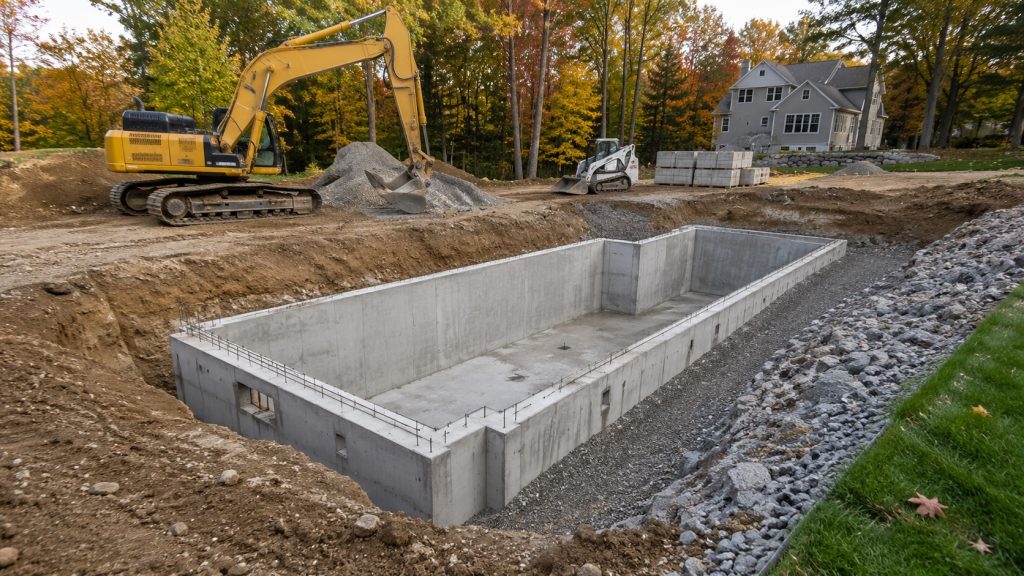
After the basement is dug, the foundation contractor typically prepares and pours the footings. This is also the stage where drainage planning becomes critical.
A full basement should never be treated like a box buried in random soil. Water needs a path away from the structure. Depending on the project, this may include footing drains, drainage stone, waterproofing, sump planning, or connections to other yard drainage solutions.
Valley View Excavating’s experience with foundation repair, basement waterproofing, and drainage work helps connect excavation planning with long-term water management.
Step 5: Backfilling Foundation Walls the Right Way
Backfill should not be rushed. Newly poured walls need proper cure time and support before soil is placed against them. The material selected for backfill matters because poor soil can trap water, settle unevenly, or create pressure against the wall.
Good backfill practice usually includes:
- Removing debris, roots, frozen material, and organic soil
- Placing suitable material in controlled layers
- Compacting carefully without overloading green foundation walls
- Protecting waterproofing and drain systems
- Keeping heavy equipment away from unsupported walls
- Shaping the surface grade to shed water
Backfilling foundation walls is one of the most important parts of the basement excavation process because it affects future settlement, drainage, patios, walkways, landscaping, and driveway areas.
Step 6: Rough Grading for Water Control
After backfill, the site is rough graded. This creates the early shape of the yard before final loam, seed, driveway prep, patios, or hardscaping.
The grade should move water away from the foundation from day one. Low spots near basement walls are a common reason new homes develop moisture issues later. Rough grading also sets up future paving, patio paver, retaining wall, and lawn areas.
Work With Valley View Excavating
A full concrete basement is more than a dig. It is a sequence of access planning, safe excavation, soil management, footing coordination, drainage prep, structural backfill, and grading.
Valley View Excavating provides professional excavation and site work for Connecticut homeowners, builders, and property owners who want the foundation stage handled correctly from the start. For a new home, addition, or structural site prep project, contact Valley View Excavating to plan the residential earthwork before concrete day arrives.