
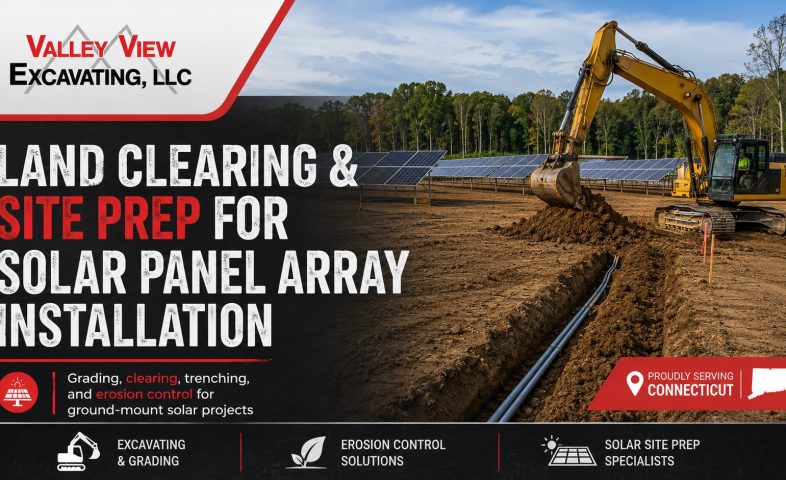
Ground-mount solar installation site prep typically includes surveying, selective land clearing, stump and root removal, controlled grading, access preparation, equipment-pad excavation, and trenching for underground electrical conduit. The goal is to create a stable construction area without unnecessarily disturbing the entire property. Sloped sites also need erosion and sediment controls installed before clearing begins. Solar construction commonly involves vegetation removal, grading, trenching, underground utility work, pile installation, and final site stabilization.
Ground-mounted solar panels need more than an open, sunny field. Trees, stumps, ledge, unstable soil, poor drainage, and steep grades can delay installation before the first rack or panel reaches the property.
At Valley View Excavating LLC, we prepare residential and commercial Connecticut sites for construction through land clearing, grading, drainage work, utility trenching, and complete excavation services. Our role is to provide the stable, accessible ground that solar engineers and installers need to complete the next phase correctly.
What Ground-Mount Solar Site Preparation Includes
Every solar project should begin with approved civil, electrical, and array-layout plans. The excavation work must follow those plans rather than clearing and leveling the property without a defined layout.
A complete ground-mount solar installation site prep plan may include:
- Construction access and equipment staging
- Selective tree and brush removal
- Stump extraction and root grubbing
- Rock and boulder removal
- Rough and finish grading
- Drainage and erosion controls
- Trenches for conduit and electrical service
- Inverter, transformer, or equipment pads
- Gravel access lanes
- Final topsoil placement and stabilization
DOE project documents show that ground-mounted solar construction can require clearing, grading, excavation, underground work, fencing, pile driving, and system cleanup. Underground conduit commonly connects the array with inverters, transformers, batteries, or the building’s electrical service.
Our excavation contractor services include land clearing, site preparation, grading, and utility trenching for residential and commercial projects.
Selective Clearing Is Better Than Stripping the Entire Site
Removing every tree and scraping the entire parcel may appear faster, but unnecessary disturbance can increase erosion, compaction, disposal costs, and restoration work.
We begin by identifying:
- The final array footprint
- Required shade-clearance areas
- Access-road locations
- Equipment and material staging zones
- Trees or natural buffers that can remain
- Wetlands, drainage paths, and protected areas
- Underground and overhead utilities
Selective clearing keeps work within the approved project area and may preserve useful vegetated buffers. Read our guide explaining how professional land clearing works before planning a larger site-development project.
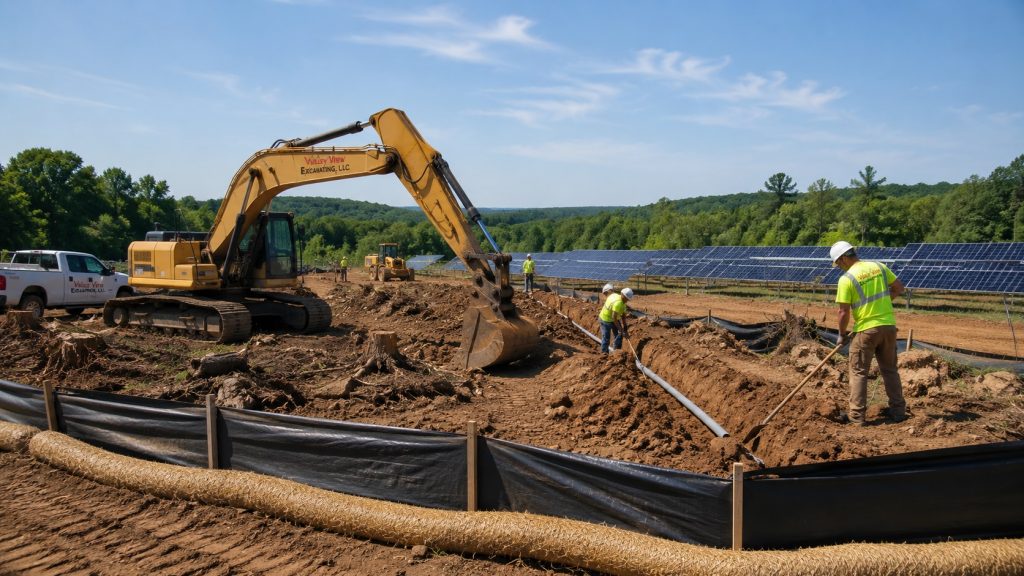
Tree, Stump, and Root Removal
Cutting trees at ground level is not enough when racking, trenching, access roads, or equipment pads will cross the area.
Remaining stumps and major roots can:
- Interfere with grading
- Obstruct pile or ground-screw locations
- Damage trenching equipment
- Decompose and create settlement
- Leave voids beneath access routes
- Regrow inside the array area
Root grubbing removes the material that could affect construction. The resulting holes must then be filled with suitable material and compacted in controlled layers.
How Much Grading Does a Solar Array Need?
There is no universal grading limit for every solar project. Acceptable slope and elevation changes depend on the engineered racking system, pile design, drainage plan, equipment clearances, and installer requirements.
The goal is often to correct isolated high spots, depressions, abrupt grade changes, and unsafe equipment access without flattening more land than necessary.
Excessive grading can strip topsoil, mix soil layers, compact the site, and increase runoff. DOE environmental reviews recognize that vegetation removal, grading, and trenching can increase erosion, soil compaction, and mixing of soil horizons.
Our team can also address rock outcroppings through controlled excavation or hydraulic rock hammering when ledge conflicts with trenches, pads, access routes, or approved array locations. Learn more about commercial site preparation and rock hammering.
Excavation and Trenching for Solar Panels
Excavation for solar panels frequently includes underground conduit routes between the array, inverter, transformer, battery system, meter, and building service.
Trenching plans should account for:
- Utility-marking requirements
- Engineered trench depth and width
- Conduit spacing
- Sweeps and changes in direction
- Stone bedding where specified
- Warning tape
- Compaction and settlement prevention
- Separation from drainage and other utilities
Coordinating trenching before final grading prevents finished areas from being excavated twice. DOE procurement guidance also notes that combining related underground conduit work can reduce future cost and disruption.
Preventing Erosion on Sloped Solar Sites
Large-scale clearing removes the vegetation and roots that previously slowed rainfall and held soil in place. Without controls, runoff can carry sediment downhill into roads, wetlands, drainage systems, and neighboring properties.
EPA warns that clearing and grading for solar farms can cause significant erosion and sediment runoff when stormwater controls are inadequate.
A practical erosion-control plan may include:
- Installing controls before clearing
- Disturbing the site in manageable phases
- Preserving vegetated buffers
- Using stabilized construction entrances
- Installing silt fence, wattles, or sediment traps
- Diverting clean uphill water around disturbed soil
- Stabilizing completed areas with seed, mulch, or erosion blankets
- Inspecting controls before and after major rain
Connecticut DEEP recognizes qualifying municipal erosion and sediment-control programs for certain construction projects disturbing between 1 and 5 acres. Larger projects and specific project types may require direct state authorization and a stormwater pollution-control plan.
Our yard drainage services include grading, trenching, pipe installation, stone bedding, and runoff management for Connecticut properties.
What Affects Land Clearing Cost Per Acre?
Land clearing cost per acre cannot be estimated accurately from acreage alone. Two equal-sized properties can require very different equipment, labor, trucking, and disposal.
Major cost factors include:
- Density and diameter of trees
- Heavy brush or light vegetation
- Number and size of stumps
- Rock outcroppings and buried boulders
- Property slope
- Soil and groundwater conditions
- Wetland or buffer restrictions
- Equipment access
- Material disposal or on-site processing
- Required erosion controls
- Final grading and restoration
- Utility-trench length
A lightly wooded, accessible field will generally cost less to prepare than a steep parcel containing mature trees, ledge, wet soil, and limited truck access.
Solar Farm Site Preparation in Central Connecticut
Valley View Excavating LLC has served Connecticut property owners since 2007, providing residential and commercial excavation, underground piping, grading, drainage, demolition, and site work from our Plainville location.
Property owners and solar contractors searching for excavation companies near you can contact our team for a land-clearing and utility-trenching consultation. We review the proposed layout, access, vegetation, rock, slope, drainage, and trench requirements before building a practical site-preparation plan.
Contact Valley View Excavating to discuss ground-mount solar or commercial solar farm site preparation in Plainville, Bristol, Southington, New Britain, and surrounding Central Connecticut communities.